


The Foundational Pillars and Evolution of the Modern Voice Assistant Industry
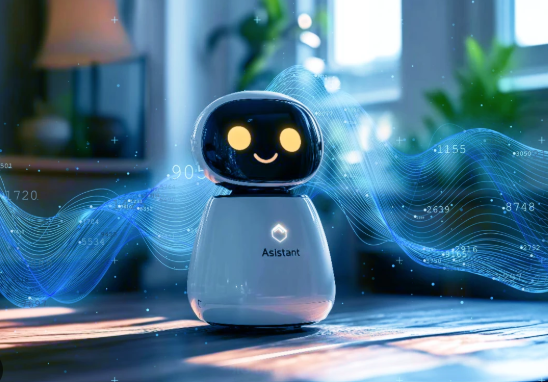
The way we interact with technology is undergoing a fundamental and profound shift, moving away from screens and keyboards towards a more natural and intuitive interface: our own voice. At the very center of this revolution is the massive and rapidly evolving Voice Assistant industry, a sector built around creating intelligent, conversational agents that can understand and respond to spoken commands. These voice assistants, embodied by household names like Amazon's Alexa, Google Assistant, and Apple's Siri, are no longer a futuristic novelty but have become a deeply integrated part of daily life for hundreds of millions of people around the world. They reside in our smartphones, smart speakers, cars, and even our home appliances, acting as a convenient, hands-free gateway to information and services. From asking for a weather forecast and setting a timer to controlling smart home devices and playing music, voice assistants are fundamentally changing our expectations of how technology should work, making it more accessible, more immediate, and more seamlessly woven into the fabric of our environment. The industry represents a new paradigm in human-computer interaction, one where the conversation is the interface.
The technological journey of the voice assistant industry has been one of incredible progress, driven by breakthroughs in artificial intelligence. The core of any voice assistant is a complex, multi-stage pipeline. It begins with a "wake word" detector, a low-power process that is always listening for a specific phrase like "Alexa" or "Hey Siri." Once activated, it begins recording the user's speech and sends it to the cloud for processing. The first step in the cloud is Automatic Speech Recognition (ASR), which uses a sophisticated deep learning model to transcribe the spoken audio into text. The second, and most critical, step is Natural Language Understanding (NLU), where another AI model analyzes the text to determine the user's intent and to extract key entities (like a song title or a city name). The third step involves the assistant's "brain" or dialogue manager, which processes the intent and fetches the required information or triggers the appropriate action. Finally, the response is converted back into speech using a Text-to-Speech (TTS) engine, which has evolved from robotic-sounding voices to incredibly natural and human-like speech. The continuous improvement in the accuracy and speed of each of these AI-powered stages is what has made voice assistants so capable and popular.
The ecosystem supporting the voice assistant industry is a fierce battleground dominated by a few of the world's largest technology companies. Amazon, Google, and Apple are the primary players, each having built a vast and vertically integrated ecosystem around their respective assistants. They not only develop the core AI technology but also manufacture the primary hardware devices (smart speakers like the Echo and Google Nest, and smartphones) on which their assistants reside. Their strategy is to create a "platform" by opening up their assistants to third-party developers through "skill" or "action" development kits. This allows other companies and individual developers to build their own voice-based applications that run on the platform, creating a network effect where a wider variety of skills makes the assistant more useful, which in turn attracts more users and more developers. This platform war is not just about selling smart speakers; it is a strategic battle to own the next major computing interface and to become the primary gateway through which users access the internet and a world of digital services.
Looking forward, the future of the voice assistant industry is pointed towards creating more proactive, personalized, and truly conversational experiences. The trend is moving away from simple command-and-response interactions towards multi-turn dialogues where the assistant can remember context, ask clarifying questions, and handle more complex, chained requests. The integration of Large Language Models (LLMs) and generative AI is accelerating this, enabling assistants to provide more detailed, creative, and human-like answers. The future assistant will also be more proactive, anticipating a user's needs based on their routines, location, and calendar, for example, by suggesting an alternate route to work when it detects heavy traffic. The expansion into more devices and environments, from cars to wearables and augmented reality glasses, will make the assistant a truly ambient and ever-present companion. As the technology continues to mature, the voice assistant is poised to evolve from a simple task-oriented tool into a deeply integrated and indispensable personal AI.
Top Trending Reports:

 English
 Arabic
 French
 Spanish
 Portuguese
 Deutsch
 Turkish
 Dutch
Dutch
 Russian
 Romaian
 Portuguese (Brazil)
 Greek
Greek