


The Architecture of the Modern Immersive Technology In Military & Defense Market Platform
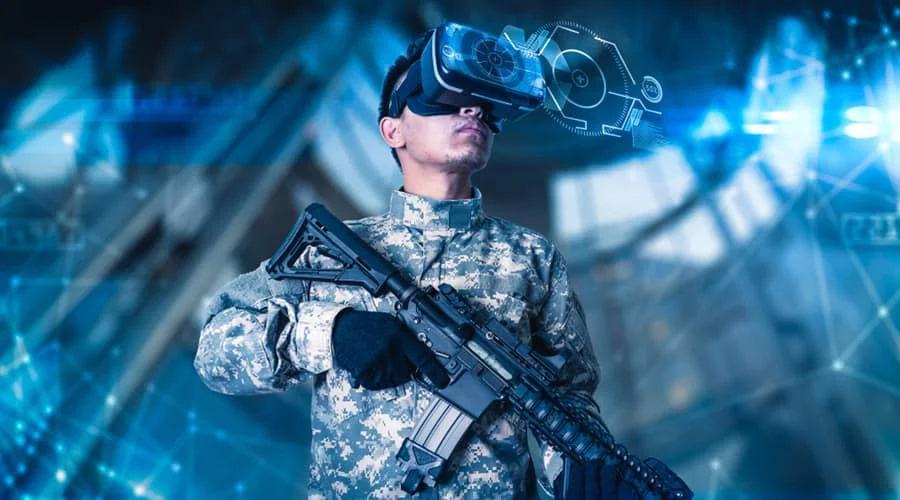
At the heart of the military's digital transformation is the evolution of the Immersive Technology In Military & Defense Market Platform, a complex, multi-layered ecosystem designed to create, manage, and deploy synthetic environments for training and operations. This platform is not a single piece of hardware or software but a "system of systems" that integrates cutting-edge commercial technology with rugged, military-grade components. The first layer of this platform is the hardware interface—the devices that immerse the user in the digital world. This includes a wide range of head-mounted displays (HMDs). For fully immersive virtual reality training, this might be a high-fidelity, wide-field-of-view headset like those from Varjo, which offer human-eye resolution for tasks requiring extreme visual acuity, such as pilot training. For augmented reality applications in the field, the hardware is a ruggedized, see-through display, like Microsoft's HoloLens-based Integrated Visual Augmentation System (IVAS), designed to withstand the rigors of combat while providing a persistent heads-up display. This hardware layer also includes haptic feedback devices, such as gloves or full-body suits, which simulate the sense of touch and add another layer of realism to the virtual experience.
The second and most crucial layer is the software engine that creates and renders the virtual world. The vast majority of modern military immersive platforms are built upon commercial gaming engines, most notably Unreal Engine from Epic Games and Unity. These powerful software development kits (SDKs) provide the foundational tools for creating hyper-realistic 3D graphics, physics simulations, audio, and complex character behaviors. The use of these commercial engines represents a seismic shift from the past, where military simulations were built on proprietary, and often clunky, software. By leveraging game engines, defense developers can tap into a massive ecosystem of tools, a global community of developers, and a rapid innovation cycle driven by the multi-billion dollar video game industry. On top of this core engine, specialized plugins and software layers are added to meet specific military requirements. This includes physics models for accurate ballistics and vehicle dynamics, AI algorithms to control intelligent adversaries, and networking code to enable large-scale, multi-user training exercises where hundreds of soldiers can interact in the same virtual environment.
The third layer of the platform is the data and content pipeline. A synthetic environment is only as good as the data used to build it. To create realistic virtual battlefields, the platform must be able to ingest and process a massive amount of geospatial data. This includes high-resolution satellite imagery, terrain elevation data, and 3D models of buildings, vehicles, and infrastructure. The goal is to create a "digital twin" of a real-world location, allowing soldiers to rehearse a mission in a virtual replica of the exact city or terrain they will be operating in. This content needs to be standardized and managed through a central repository, allowing different simulations and applications to pull from a common "virtual world" database. This concept of a "One World Terrain" is a key focus of development, ensuring that a pilot in a VR flight simulator sees the exact same terrain as an infantry soldier using an AR device on the ground. This content layer is the key to creating a coherent and persistent synthetic environment that can be used across all branches of the military.
The final and most ambitious layer of the platform is the integration and networking fabric that connects everything together, forming the Synthetic Training Environment (STE). This is the technological backbone that will enable the vision of a "military metaverse." It involves the development of open standards and protocols, such as the High-Level Architecture (HLA), that allow disparate simulations, developed by different vendors, to communicate and interoperate with each other. This integration fabric must be able to connect live, virtual, and constructive entities. "Live" refers to real soldiers and equipment in the field, whose position and status are tracked and injected into the virtual world. "Virtual" refers to soldiers in simulators. "Constructive" refers to computer-generated entities, such as large enemy formations, that are controlled by AI. By seamlessly blending these three types of entities, the STE platform allows for the creation of incredibly complex, large-scale exercises that would be impossible to conduct purely in the real world, providing the ultimate platform for preparing for the future of multi-domain conflict.
Top Trending Reports:

 English
 Arabic
 French
 Spanish
 Deutsch
 Turkish
 Dutch
Dutch
 Italiano
 Russian
 Romaian
 Portuguese (Brazil)
 Greek
Greek