Building a strong brand is one of the most important steps for any business. Whether you run a startup, e-commerce store, manufacturing company, consultancy, or restaurant, protecting your brand name through trademark registration is essential. However, before filing a trademark application, one crucial step often creates confusion for business owners — choosing the correct trademark class.
Selecting the wrong trademark class can lead to objections, delays, rejection of the application, or weak legal protection for your brand. That is why understanding trademark classes is extremely important before applying for trademark registration in India.
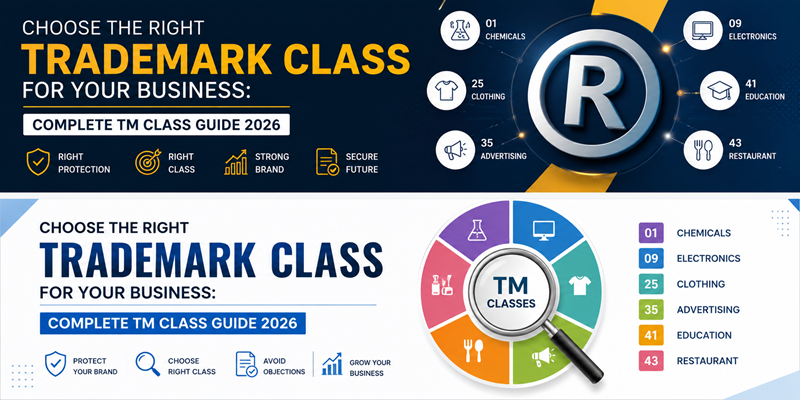
In this complete TM Class Guide 2026, we will explain what trademark classes are, why they matter, how to choose the right class for your business, and common mistakes businesses should avoid.
What is a Trademark Class?
A trademark class is a category used to classify different types of goods and services for trademark registration. The Trademark Registry divides all products and services into separate classes so that businesses can register trademarks according to their business activities.
In India, trademark classification follows the Nice Classification System (NCL), an internationally accepted system that contains:
- Classes 1 to 34 for Goods
- Classes 35 to 45 for Services
Each class represents a specific business category. When applying for a trademark, you must select the class that best matches your products or services.
Why Choosing the Right Trademark Class is Important
Choosing the correct trademark class is essential because trademark protection is granted only for the class in which the trademark is registered.
For example:
- If you register your trademark under clothing products, it may not automatically protect your brand for restaurant services.
- Another company may legally use a similar name in a different class if your brand is not properly protected.
Benefits of Choosing the Correct Trademark Class
- Strong legal protection for your brand
- Avoid trademark objections and rejection
- Better brand identity and exclusivity
- Easier trademark approval process
- Protection from competitors using similar names
- Long-term business security
Understanding Trademark Classes in India
Trademark classes are divided into two major categories:
1. Goods Classes (Class 1–34)
These classes cover physical products and manufactured goods.
Examples:
- Chemicals
- Cosmetics
- Medicines
- Electronics
- Clothing
- Furniture
- Food products
2. Service Classes (Class 35–45)
These classes cover services offered by businesses and professionals.
Examples:
- Advertising
- Education
- Restaurant services
- Legal services
- IT services
- Financial services
Most Common Trademark Classes for Businesses
Below are some popular trademark classes commonly used in India:
| Trademark Class |
Business Category |
| Class 9 |
Software, electronics, mobile apps |
| Class 25 |
Clothing, footwear, fashion products |
| Class 30 |
Tea, coffee, bakery, spices |
| Class 35 |
Advertising, business consultancy, online selling |
| Class 41 |
Education, training, coaching institutes |
| Class 42 |
IT services, software development |
| Class 43 |
Restaurants, cafes, hotels |
| Class 44 |
Medical and beauty services |
Understanding your business activity helps identify the correct class.
How to Choose the Right Trademark Class for Your Business
1. Understand Your Business Activity
The first step is to clearly identify what your business does.
Ask yourself:
- Are you selling products or services?
- What type of products do you manufacture or sell?
- What services do you offer?
For example:
- A clothing brand usually falls under Class 25.
- A digital marketing agency falls under Class 35.
- A software company falls under Class 42.
2. Check the Trademark Class List
Review the official trademark classification list carefully. Each class contains a detailed description of covered products and services.
Many businesses assume their business belongs to one class when it may actually require multiple classes.
For example:
- A restaurant selling packaged food may need both Class 43 and Class 30.
- An online clothing brand may need Class 25 and Class 35.
3. Consider Future Business Expansion
Businesses often expand their services over time. While selecting a trademark class, think about future growth plans.
If you plan to:
- Launch new products
- Offer additional services
- Expand into e-commerce
- Open franchise operations
You may require trademark protection in multiple classes.
4. Search Existing Trademarks
Before filing, conduct a trademark search to check whether similar trademarks already exist in your selected class.
This helps:
- Avoid trademark objections
- Reduce chances of rejection
- Save legal costs and time
A professional trademark consultant can help perform a proper trademark search.
5. Take Professional Guidance
Trademark classification can sometimes be confusing, especially for startups and multi-service businesses.
Professional trademark experts can help:
- Identify the correct class
- Avoid filing mistakes
- Prepare accurate trademark applications
- Reduce rejection risks
Can a Trademark Be Registered in Multiple Classes?
Yes. Businesses operating in different sectors can register a trademark in multiple classes.
For example:
A company selling cosmetics online may require:
- Class 3 for cosmetics
- Class 35 for online retail services
This is called multi-class trademark registration.
Although filing in multiple classes increases registration cost, it offers stronger brand protection.
Common Mistakes While Choosing Trademark Classes
Many businesses make errors during trademark filing. Here are some common mistakes:
1. Choosing the Wrong Class
Filing under the incorrect class may result in rejection or limited protection.
2. Ignoring Service Classes
Businesses focusing only on products often forget service-related classes.
3. Not Planning Future Expansion
Businesses may later discover they need additional trademark registrations.
4. Filing Without Trademark Search
This increases the risk of objections due to similar existing trademarks.
5. Copying Competitor Classes Blindly
Every business has different operations and protection needs.
Difference Between Goods and Service Trademark Classes
Understanding the difference between goods and services is important.
1. Goods
Physical products that can be manufactured, sold, or stored.
Examples:
- Clothes
- Medicines
- Electronics
- Food items
2. Services
Activities or professional assistance provided to customers.
Examples:
- Consultancy
- Restaurant services
- Education
- Digital marketing
Some businesses may fall under both categories.
Trademark Class Examples for Different Industries
1. E-commerce Business
- Class 35 for online retail services
2. Restaurant Business
- Class 43 for food and restaurant services
3. IT Company
- Class 42 for software and technology services
4. Coaching Institute
- Class 41 for education and training services
5. Cosmetic Brand
- Class 3 for beauty and cosmetic products
6. Pharmaceutical Company
- Class 5 for medicines and healthcare products
What Happens if You Choose the Wrong Trademark Class?
Selecting the wrong class can create serious problems, including:
- Trademark objections
- Application rejection
- Loss of legal protection
- Extra government fees for refiling
- Delay in registration process
In some cases, businesses must file a completely new trademark application.
That is why class selection should never be taken lightly.
Tips for Successful Trademark Registration
1. Choose a Unique Brand Name
Avoid generic or commonly used names.
2. Conduct Proper Trademark Search
Always check trademark availability before filing.
3. Select Accurate Trademark Class
Ensure the class matches your actual business activities.
4. File Early
Register your trademark before competitors use a similar name.
5. Monitor Your Trademark
Keep track of unauthorized use of your brand.
Conclusion
Trademark registration is one of the smartest investments for any business. However, selecting the correct trademark class is equally important for obtaining complete legal protection.
A properly selected trademark class protects your brand identity, prevents future legal disputes, and strengthens your market presence. Whether you run a startup, online business, restaurant, consultancy, or manufacturing company, understanding trademark classification helps you secure your business professionally.
Before filing your trademark application, always analyze your business activities carefully, review the trademark class list, and seek professional guidance if required.
Choosing the right trademark class today can save your business from legal and branding problems in the future.
Frequently Asked Questions (FAQs)
1. How many trademark classes are there in India?
India follows the Nice Classification System, which contains 45 trademark classes:
- Classes 1–34 for goods
- Classes 35–45 for services
2. Can I register my trademark in more than one class?
Yes. Businesses offering multiple products or services can apply for trademark registration in multiple classes for better protection.
3. What is the most common trademark class for online businesses?
Class 35 is commonly used for online selling, advertising, and e-commerce services.
4. What happens if I file under the wrong trademark class?
Your trademark application may face objections, rejection, or limited protection. In many cases, you may need to refile the application.
5. Do startups need trademark registration?
Yes. Trademark registration helps startups protect their brand identity, build trust, and avoid future legal disputes with competitors.




 English
 Arabic
 French
 Spanish
 Deutsch
 Turkish
 Dutch
Dutch
 Italiano
 Russian
 Romaian
 Portuguese (Brazil)
 Greek
Greek