


The Architecture of an Intelligent Network: Deconstructing the AI in Telecommunication Market Platform
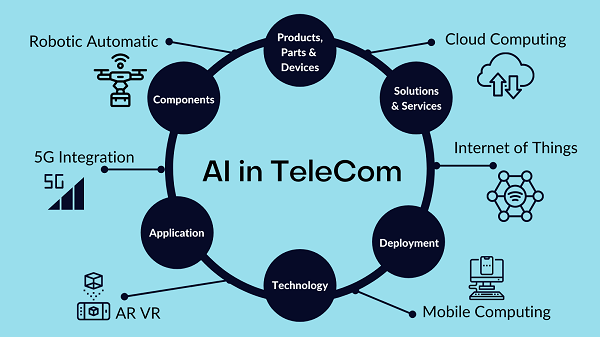
The modern AI in Telecommunication Market Platform is a sophisticated, multi-layered technology stack designed to infuse intelligence into every aspect of a Communication Service Provider's (CSP) operations. This platform is not a single product but an integrated ecosystem that handles the entire data-to-insight-to-action lifecycle. The foundational layer of this platform is the Data Ingestion and Management Layer. This is a critical component responsible for collecting and unifying the massive volumes of data generated across the telecom network. This includes real-time streaming data from network elements (like cell towers and routers), performance data from probes, call detail records (CDRs), customer interaction data from CRM and call center systems, and even external data like social media feeds. This layer utilizes big data technologies, such as data lakes and high-throughput data streaming platforms like Kafka, to create a single, unified repository of all operational and customer data. Ensuring the quality, governance, and accessibility of this data is the essential first step for any successful AI initiative.
The heart of the platform is the second layer: the AI and Machine Learning (ML) Development and Execution Engine. This is the "brain" of the system, where the actual analytical models are built, trained, and deployed. This layer provides a comprehensive workbench for data scientists and ML engineers, often based on a major cloud platform like AWS, Azure, or Google Cloud, or a specialized AI platform from a vendor like IBM or SAS. It includes a suite of tools for data preparation, feature engineering, and model development using a variety of ML frameworks (like TensorFlow and PyTorch). This engine is used to create a wide range of models, such as predictive models for network fault prediction and customer churn, anomaly detection models for fraud and security, and optimization models for network resource allocation. A key feature of a modern platform is a robust MLOps (Machine Learning Operations) framework, which automates the process of deploying, monitoring, and retraining these models in production to ensure they remain accurate and performant over time.
The third layer is the Application and Business Logic Layer. This is where the generic outputs of the AI models are translated into specific actions within the context of a telecom business process. This layer consists of a suite of specialized applications, each designed to solve a particular problem. For example, a Predictive Maintenance application would take the failure predictions from an AI model and automatically generate a work order in the field service management system. A Customer Churn Management application would take the churn predictions and trigger a targeted retention campaign in the marketing automation platform. An Intelligent Chatbot application would use a Natural Language Processing (NLP) engine to understand customer queries and provide automated responses. This application layer is crucial for "operationalizing" the AI, transforming the statistical predictions of the models into tangible business actions and workflows that drive real value.
The final layer of the platform is the Integration and Orchestration Layer. A modern telecom operator uses dozens of different operational and business support systems (OSS/BSS). The AI platform cannot exist in a silo; it must be able to both pull data from and push actions to these other systems. This layer provides a rich set of APIs and pre-built connectors that allow the AI platform to integrate seamlessly with the rest of the enterprise IT landscape. It also includes a workflow automation or orchestration engine that can manage complex, multi-step processes that span across different systems. For example, when the AI platform predicts network congestion in a particular area, the orchestration engine could trigger a series of automated actions: re-routing traffic, adjusting antenna parameters, and sending a proactive notification to affected customers via the CRM system. This ability to orchestrate automated, closed-loop actions across the entire technology stack is the ultimate expression of an intelligent, self-driving network.
Top Trending Reports:

 English
 Arabic
 French
 Spanish
 Portuguese
 Deutsch
 Turkish
 Dutch
 Italiano
 Russian
 Romaian
 Greek