


The Essential Framework of the Modern and Strategic Data Governance Industry
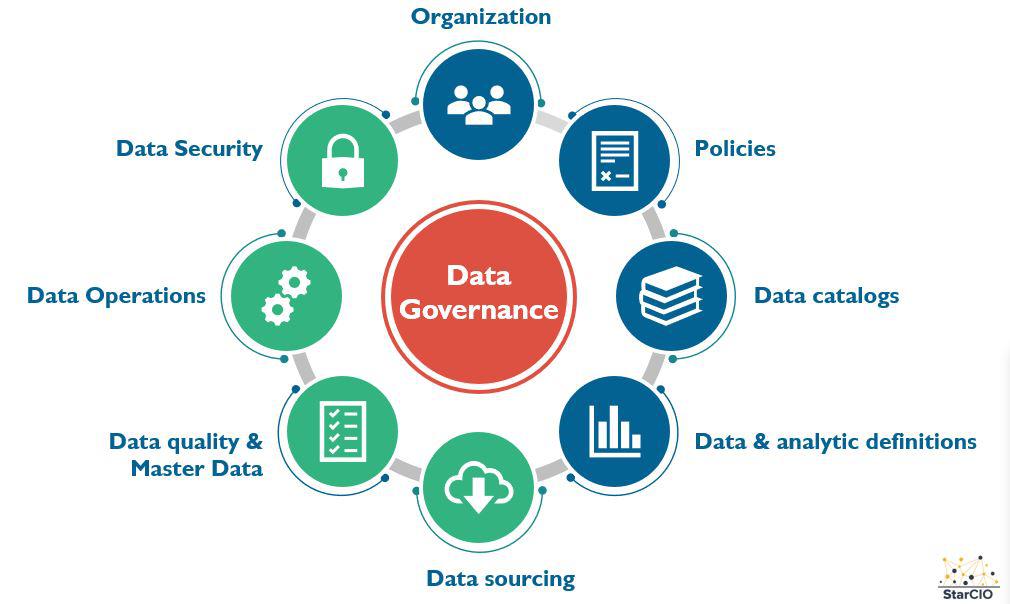
In an economy increasingly powered by data, the raw information itself is of little value without a framework to ensure its quality, security, and usability. This foundational framework is the purview of the global Data Governance industry, a critical and rapidly expanding sector that establishes the policies, processes, standards, and controls for managing an organization's data assets. It moves beyond the technical mechanics of data management to address the overarching strategy of how data is handled across its entire lifecycle. Data governance is fundamentally about assigning ownership, defining rules, and creating accountability to ensure that data is treated as a strategic enterprise asset. By implementing a robust data governance program, organizations can transform their data from a potential liability—rife with quality issues and security risks—into a trustworthy foundation for critical business operations, advanced analytics, and regulatory compliance. It answers the crucial questions of who can take what action, on what data, in what situations, using what methods, to achieve what purpose, thereby bringing order and trust to the often-chaotic world of enterprise data.
The core of any effective data governance program rests on three essential pillars: people, processes, and technology. The "people" component involves establishing clear roles and responsibilities. This includes identifying Data Owners, who are senior stakeholders accountable for the data within their business domain, and Data Stewards, who are subject-matter experts responsible for the day-to-day management of data quality, definitions, and usage. A central Data Governance Council, often led by a Chief Data Officer (CDO), typically oversees the entire program. The "processes" pillar defines the workflows and rules for how data is created, accessed, modified, and retired. This includes processes for data quality remediation, managing master data, defining business terms in a glossary, and handling data access requests. These processes ensure that the established policies are consistently applied throughout the organization. Finally, the "technology" pillar provides the tools that enable and automate these processes. This includes data catalogs for discovering and understanding data, data quality tools for profiling and cleansing data, and master data management (MDM) platforms for creating a single, authoritative view of key business entities like customers and products.
Without a formal data governance framework, organizations inevitably fall victim to a host of pervasive and costly problems. One of the most common is the proliferation of "data swamps"—vast repositories of poorly documented and low-quality data that are virtually unusable for analytics. This leads to a profound lack of trust in data, where different departments report conflicting numbers for the same key performance indicator (KPI), undermining confidence in all reporting and analysis. This inconsistency is often a symptom of "data silos," where data is locked away in disparate systems with no common definitions or standards, preventing a holistic view of the business. Furthermore, ungoverned data poses a significant security and compliance risk. Without clear policies for data classification and access control, sensitive information is vulnerable to both internal misuse and external breaches. This can result in severe financial penalties from regulatory bodies, reputational damage, and loss of customer trust. Data governance is the strategic antidote to this chaos, providing the necessary structure to mitigate these risks.
Ultimately, the strategic imperative for data governance is its role as a critical enabler of business value. It is not merely an IT or compliance exercise; it is the foundation upon which all successful data-driven initiatives are built. For Business Intelligence (BI) and analytics, data governance ensures that the data feeding into dashboards and reports is accurate, consistent, and trustworthy, leading to more confident and effective decision-making. For Artificial Intelligence (AI) and Machine Learning (ML), it solves the "garbage in, garbage out" problem by providing high-quality, well-documented training data, which is essential for building accurate and unbiased models. In the context of customer experience, data governance enables the creation of a single, unified view of the customer, allowing for more personalized and effective marketing and service interactions. By establishing a culture of data accountability and providing a single source of truth, data governance transforms an organization's data into a reliable, secure, and powerful asset that can be leveraged to drive innovation, improve efficiency, and create a sustainable competitive advantage in the digital economy.
Top Performing Market Insight Reports:
Brain Computer Interface Market

 English
 Arabic
 French
 Spanish
 Portuguese
 Turkish
 Dutch
Dutch
 Italiano
 Russian
 Romaian
 Portuguese (Brazil)
 Greek
Greek