1. Understanding Liver Transplant Surgery
A liver transplant involves replacing a damaged or diseased liver with a healthy one from a donor. It is often recommended for patients suffering from:
- Liver cirrhosis
- Liver failure
- Liver cancer
- Genetic liver disorders
- Advanced fatty liver disease
The liver performs hundreds of vital functions, including detoxification, metabolism, and nutrient storage. When it stops functioning properly, a transplant may become the only effective treatment option.
Traditionally, liver transplants require large abdominal incisions, making the procedure physically demanding for both patients and surgeons.
2. What Is Robotic Surgery?
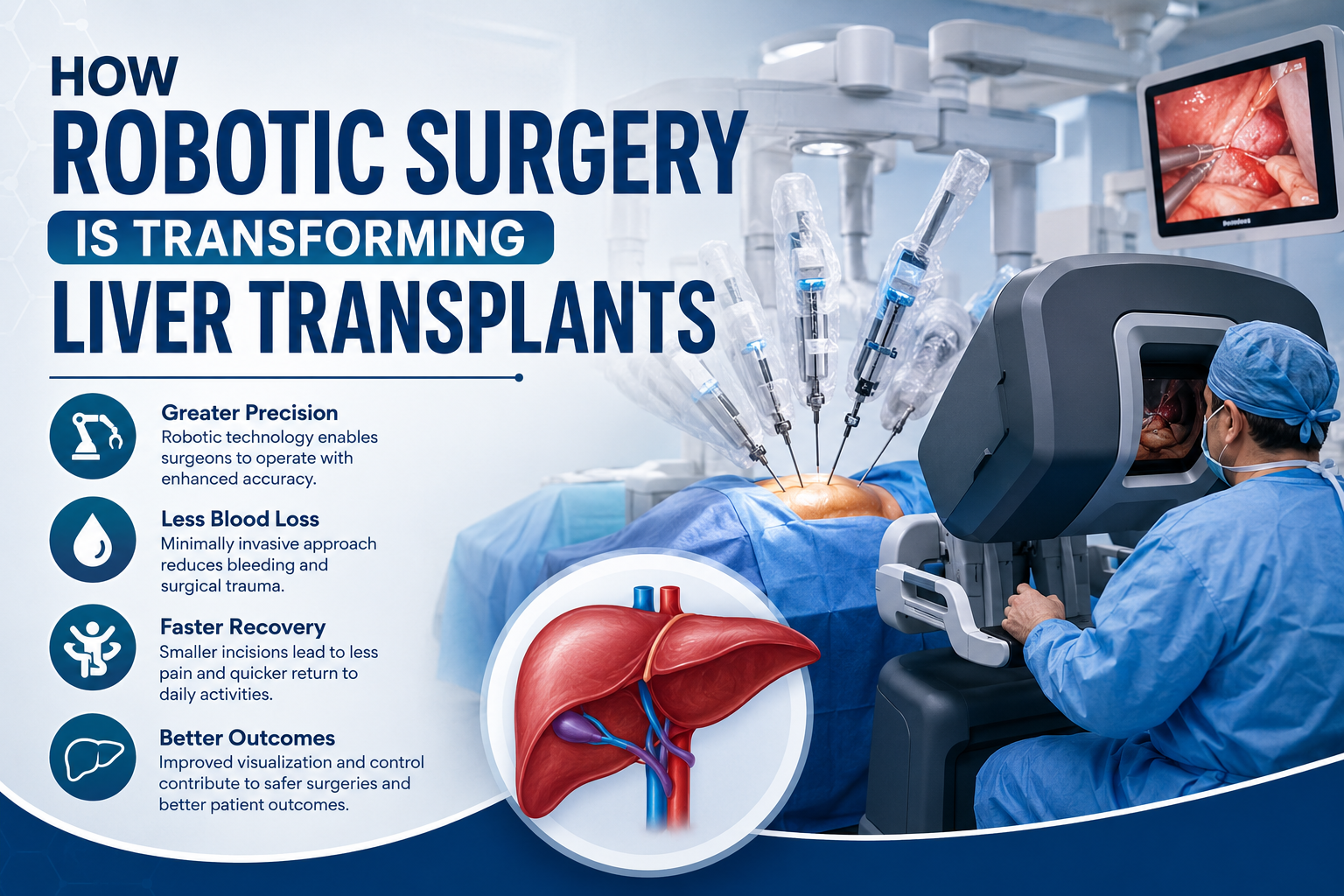
Robotic surgery is a minimally invasive surgical technique where surgeons control robotic instruments using a specialized console.
Despite the name, the robot does not perform the surgery independently. Instead, the surgeon remains in complete control throughout the procedure.
The robotic system translates the surgeon's hand movements into precise, tiny movements of surgical instruments. This technology allows surgeons to operate with exceptional accuracy in areas that may be difficult to access through conventional methods.
3. How Robotic Systems Work
Advanced Surgical Control
The robotic platform includes:
- A surgeon's console
- Robotic arms
- High-definition 3D cameras
- Specialized surgical instruments
The surgeon sits at the console and views a magnified three-dimensional image of the surgical area.
Greater Range of Motion
Unlike the human wrist, robotic instruments can rotate and move with extraordinary flexibility. This helps surgeons perform delicate procedures around blood vessels and vital organs with greater confidence.
4. Why Precision Matters in Liver Transplants
The liver is one of the most vascular organs in the body. It contains a complex network of blood vessels and bile ducts.
Even a small error can have significant consequences.
Delicate Surgical Environment
During a liver transplant, surgeons must:
- Remove the diseased liver
- Preserve surrounding structures
- Connect major blood vessels
- Reconstruct bile ducts
Robotic technology provides the precision necessary for these intricate steps.
Minimizing Complications
Greater precision can reduce the risk of:
- Excessive bleeding
- Infection
- Damage to nearby organs
- Post-operative complications
5. Benefits of Robotic Liver Transplant Surgery
Robotic surgery offers several advantages that are changing the liver transplant landscape.
Smaller Incisions
Traditional liver surgery often requires large incisions across the abdomen.
Robotic surgery uses smaller incisions, resulting in:
- Less pain
- Reduced scarring
- Better cosmetic outcomes
Enhanced Surgical Accuracy
The system filters out natural hand tremors and improves precision, helping surgeons perform highly complex procedures with greater control.
Improved Patient Experience
Patients often experience a smoother recovery journey compared to traditional surgery.
6. Reduced Blood Loss and Surgical Trauma
One of the most significant advantages of robotic surgery is reduced blood loss.
Better Control of Blood Vessels
The magnified surgical view allows surgeons to identify and manage blood vessels more effectively.
Less Tissue Damage
Smaller instruments and precise movements minimize trauma to surrounding tissues.
As a result, patients may require fewer blood transfusions and experience fewer complications during recovery.
7. Faster Recovery for Patients
Wouldn't everyone prefer to spend less time in the hospital?
Robotic surgery helps make that possible.
Shorter Hospital Stay
Many patients recover faster because:
- Incisions are smaller
- Pain is reduced
- Mobility improves sooner
Quicker Return to Daily Activities
Patients can often resume normal activities more quickly than those who undergo traditional open surgery.
This can have a positive impact on both physical and emotional well-being.
8. Improved Outcomes for Living Donors
Living donor liver transplantation has become increasingly important due to the shortage of deceased donor organs.
Protecting Healthy Donors
Living donors undergo surgery solely to help another person. Therefore, minimizing surgical risk is critical.
Robotic-assisted donor surgery may provide:
- Smaller scars
- Less post-operative pain
- Faster recovery
- Reduced hospital stay
Encouraging Organ Donation
When donor surgery becomes less invasive, more people may feel comfortable considering living donation.
9. Enhanced Visualization for Surgeons
3D High-Definition Imaging
One of the standout features of robotic systems is superior visualization.
Surgeons can view the operative field in:
- High definition
- Three dimensions
- Significant magnification
Better Decision-Making During Surgery
Improved visualization helps surgeons identify critical structures more clearly and make informed decisions in real time.
This enhanced perspective contributes to greater surgical confidence and precision.
10. Robotic Surgery in India
India has emerged as a global destination for advanced liver transplant procedures.
Growing Adoption of Technology
Leading transplant centers are increasingly investing in robotic surgical systems to provide patients with cutting-edge treatment options.
World-Class Expertise
Many hospitals combine advanced technology with highly skilled transplant specialists.
Patients seeking the best liver transplant surgeon in india often evaluate:
- Surgical experience
- Success rates
- Hospital infrastructure
- Availability of robotic technology
- Multidisciplinary care teams
India's combination of expertise and affordability continues to attract both domestic and international patients.
11. Challenges and Limitations
While robotic surgery offers numerous benefits, it is not without challenges.
High Equipment Costs
Robotic systems require substantial investment, making them available primarily in advanced medical centers.
Specialized Training Requirements
Surgeons must undergo extensive training before performing robotic-assisted procedures.
Not Suitable for Every Case
Some patients may still require traditional open surgery depending on:
- Disease severity
- Anatomical complexity
- Previous surgeries
- Emergency circumstances
A thorough evaluation is essential before determining the best approach.
12. The Role of the Surgical Team
Technology alone does not guarantee success.
Teamwork Is Essential
A successful liver transplant involves:
- Transplant surgeons
- Hepatologists
- Anesthesiologists
- Critical care specialists
- Nurses
- Rehabilitation experts
Human Expertise Remains Central
The robotic system is simply a sophisticated tool. The skill, judgment, and experience of the medical team remain the most important factors in achieving positive outcomes.
13. Future Innovations in Liver Transplantation
The future of liver transplantation looks incredibly promising.
Artificial Intelligence Integration
Emerging technologies may help surgeons:
- Plan procedures more effectively
- Predict complications
- Improve surgical precision
Advanced Imaging Technologies
Future systems may offer even better visualization and navigation during surgery.
Personalized Surgical Planning
Three-dimensional modeling and virtual simulations could allow surgeons to tailor procedures to each patient's unique anatomy.
14. Choosing the Right Surgeon and Hospital
Selecting the right transplant center is one of the most important decisions a patient can make.
Questions to Ask
Before choosing a hospital, consider asking:
- How many liver transplants are performed annually?
- Is robotic-assisted surgery available?
- What are the success rates?
- How experienced is the transplant team?
- What support services are offered after surgery?
Experience Matters
When searching for the best liver transplant surgeon in india, focus on expertise, outcomes, and comprehensive patient care rather than technology alone.
A skilled surgeon supported by a strong multidisciplinary team often delivers the best results.
15. What Patients Should Know Before Surgery
Preparation plays a vital role in transplant success.
Medical Evaluation
Patients typically undergo:
- Blood tests
- Imaging studies
- Cardiac assessments
- Psychological evaluations
Lifestyle Adjustments
Doctors may recommend:
- Healthy eating habits
- Regular exercise
- Avoiding alcohol
- Quitting smoking
Long-Term Commitment
A liver transplant is not just a surgery; it is a lifelong journey that requires ongoing follow-up and medication adherence.
Conclusion
Robotic surgery is redefining the future of liver transplantation by bringing greater precision, enhanced visualization, reduced surgical trauma, and faster recovery for patients. While it does not replace the expertise of skilled surgeons, it serves as a powerful tool that helps improve outcomes in carefully selected cases.
As more hospitals adopt robotic technology and surgical teams gain experience, patients can expect even better results in the years ahead. For individuals facing liver disease, understanding these advancements can help them make informed decisions about their treatment options. When looking for the best liver transplant surgeon in india, it is important to consider not only advanced technology but also the surgeon's expertise, experience, and track record of successful liver transplants.
FAQs
1. What is robotic liver transplant surgery?
Robotic liver transplant surgery is a minimally invasive procedure in which surgeons use robotic-assisted technology to perform parts of the transplant with greater precision and control.
2. Is robotic surgery safer than traditional liver transplant surgery?
Robotic surgery may offer advantages such as smaller incisions, reduced blood loss, and faster recovery. However, safety depends on the patient's condition and the experience of the surgical team.
3. Can all liver transplant patients undergo robotic surgery?
No. Not every patient is a suitable candidate. The decision depends on factors such as disease severity, anatomy, previous surgeries, and overall health.
4. Does robotic surgery reduce recovery time after a liver transplant?
In many cases, yes. Patients often experience less pain, shorter hospital stays, and quicker return to daily activities compared to traditional open surgery.
5. How can I find the best liver transplant surgeon in india?
Look for surgeons with extensive transplant experience, strong success rates, advanced hospital facilities, multidisciplinary support teams, and expertise in modern surgical techniques, including robotic-assisted procedures.




 English
 Arabic
 French
 Spanish
 Portuguese
 Deutsch
 Turkish
 Dutch
Dutch
 Russian
 Romaian
 Portuguese (Brazil)
 Greek
Greek